Monday, 4 August 2008

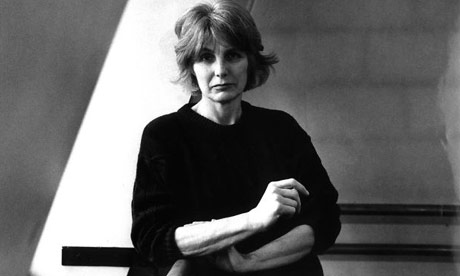
Vashti Bunyan


"Why should you say I could love any man, have his children and still be free? Go on voting, striking and fighting. Go on searching, fighting and loving."

How Do I Know.

As a lyric in isolation, this pretty much sums up everything that draws me and concerns me about 'feminism'. Men and women both work these days and earn roughly the same but while being born female is fate, motherhood is made the destiny of a lot of women. It's a privilege to have somebody to care for but motherhood also seems the ultimate prison. All mothers are single mothers at the end of the day. Once that decision to be a mother has been made, there's no turning back. It's nothing less than traumatic. Yet, we're still pretty much expected to make that transition of freedom to non freedom.

Vashti Bunyan wanted most of all in life to be a pop singer, something she still upholds as being the dream she had for herself. What she did instead was release some folk tunes then turn her back on what she saw as her ambition failure, to take two years to head to Donovan's commune in the Isle of Skye. It took two years for her to get there and by the time her and her boyfriend Robert arrived, it had closed down. Still, more spiritual wisdom; it's all about the journey, not the destination and this inspired an album.

They set up home nonetheless and raised children together but Vashti didn't sing again for 35 years. The reasons for that aren't completely clear. Perhaps she didn't feel like it, perhaps she was just content with family life. She busied herself in domesticity which she enjoyed, but there was still a renunciation in place. Her children knew snippets of their mother's past but she never so much as sang to them.

Still it was wanting to share her past with her children, and the advent of the Internet (which made clear to her how much she had grown into cult status in the meantime and also just how many of those scratchy old tapes were issued in compilations) that prompted her to make a new album, Lookaftering; an experience she enjoyed returning to.

And, yes, in her own words, she felt like a flower unfolding after all that time.

Listen to this. Buy this.

Vashti Bunyan, born in London in 1945

Friday, 18 July 2008

Ruth Madoc


Did you know Ruth Madoc went to RADA? Did you know she played Fruma Sarah in the film "Fiddler on the Roof"? Did you know she looks and sounds spookily like my Mum (especially in the 80s and early 90s when Mum had her trademark short, straight hair and her accent was at her strongest)?

We remember her as the 'vamp from the valleys' in Hi de Hi of course and that Wispa ad with her longed for love object, Jeffrey. Actually looking again at that ad, she's hot, what was Jeffrey thinking? Jeffrey, the gauche, bumbling Hugh Grant of his time with all the passion of a wet Pontins' tea towel. You should have targetted someone a bit more rum, Gladys. Was he really worth hanging around in a banana-shaded uniformed job for? Bet she doesn't think so now.

On stage Ruth has done everything from Shakespeare to musicals, co-starring with the late Harry Secombe in Pickwick, playing Dorothy Brock in 42nd. Street and an 80 year old Jewish mother in Gypsy.

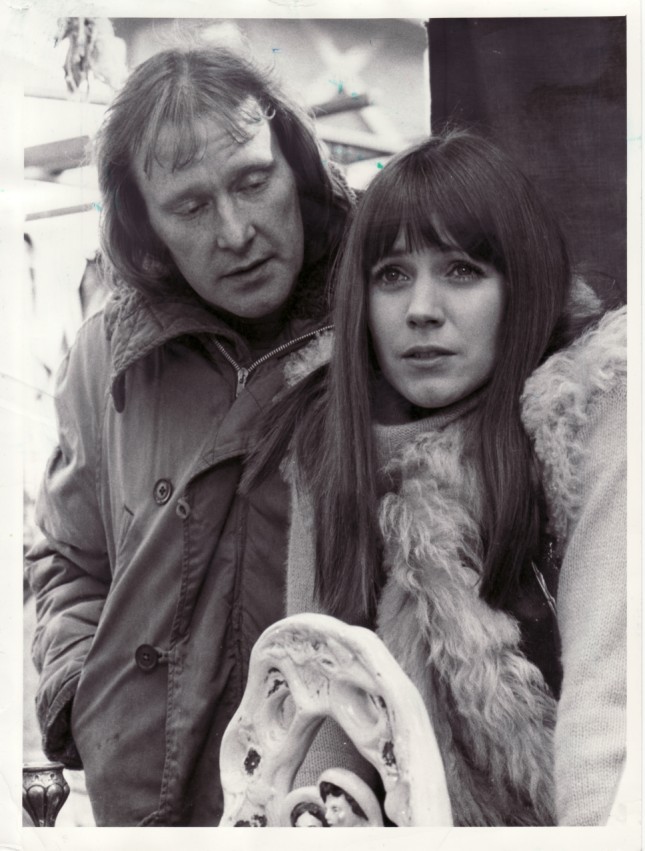
Most interesting for me, she played the daughter's role in the stage version of A Taste of Honey, and while no Tush, I bet she was great and was less of a mousy, hide under her fringe victim than le Tush. It would have been interesting to see.

In 2000 she played the role of Mrs. Ifans in Very Annie Mary alongside fellow Welsh actor Jonathan Pryce.

But life was not always smooth for Ruth, she was brought up by her Grandparents in a small Welsh town, near Swansea because her parents were nomadic and couldn't settle to a life of child-rearing.

She was and still is greatly loved as a symbol of Welsh freshness with anyone old enough to remember balancing a French Fancy on their knee while tuning into Hi-de-Hi. Lest we forget her serious side too though. This is what one fan remembers:


John Price from Rotherham ---originally Porthcawl (presumably not *that* John Price)
Yes a good actress---I remember seeing her in a television version of Dylan Thomas' under milk wood and since that scene of her in the water have always thought what a good looking lady she is.


That ad in full:


Ruth Madoc, born 16 April 1943 in Norwich but brought up in Llansamlet, near Swansea.

Thursday, 19 June 2008

Floella Benjamin


Did you know Floella was the first to appear fully pregnant on British TV? (In Play School).

For a woman whose ambition was to be Britain's first black bank manager, her life took a totally different course. There just weren't black bank managers back then, but black people were accepted into the theatre, so that's the way she went.

Similarly there weren't many black people on TV during the 70s and 80s. The TV channels were becoming more senstive to the fact, especially in representing children, firstly in the 60s and later on with Derek Griffiths, but the main allure of her was I got the impression she genuinely loved being around children and not just adorning the shop floor for the career bump-up. Sourcing pics for this post, there were hundreds of her and not one without her beaming.

Floella starred in two of the upper echelons of Play for Todays from one of its golden eras (the late 70s). She starred in 'A hole in Babylon' in 1979, about a seige in an Italian restaurant that goes wrong and Waterloo Sunset (also 1979, the year that brought us the dazzling performance of Jonathan Pryce in Trevor Griffith's 'The Comedians') a play about racial disharmony in a poky London flat. A young man and his elderly relative lives on a mostly West Indian London housing estate. The pivotal scene involves the naive old woman dusking her chops with cocoa in order to fit in with them, but they take it the wrong way and she has to leave.

A few years prior, too, in 1975, she starred in the Play for Today 'The Floater' - where she was lucky enough to appear alongside Richard Beckinsale (who played a solicitor's clerk acting for his sick wife). Yum yum.

She also appeared in many films (mainly playing a nurse) but 'Black Joy' is a film of note about a naive African immigrant arriving in Brixton, with Norman Beaton as the wise-arse, no-good rude boy she falls in with. Floella plays Beaton's non shit-taking wife. Vivian Stanshall's in it too, weirdly, as a pervy vicar.

In more recent years she was cast in Doctor Who and there's the Floella Benjamin Awards in Exeter University (which gave her an honoury doctorate) where up to £1,000 is given to promising students to help improve their future job prospects.

Predictably but admirably she runs a lot for charity these days.

Floella Benjamin OBE (born in Trinidad, 1949)

Monday, 26 May 2008

Pam Ayres


Pam Ayres was born at Stanford in the Vale in Oxfordshire. She went to same school as my younger brother in Faringdon and to this day lives down the road from where my family until recently lived.

As kids my older sister was mad about her poems and being a younger sibling, whatever tickled my sister's fancy piqued my interest. 'I wish I'd looked after my teeth' prompted me to brush regularly, morning and night which has held to this day. I visit the dentist about every 7-8 years and it's always a wasted journey because I never need anything doing. So thanks for that Pam. This poem was also voted into the Top 10 of a BBC poll to find the Nation's 100 Favourite Comic Poems.

I was always a massive Roald Dahl fan over Ayres but this changed soon after when I discovered poetry at around the age of 8 thanks to her. My sister learned to read by Grandad teaching her William Blake's The Fly, but I learned to write poetry by reading her stuff basically. I used to write volumes of the stuff, always illustrated, I don't think my parents still have them, but one of my poems 'springtime' is still inscribed on our oak table that we now have in our flat.


A BBC website stated that Bob Dylan inspired Pam Ayres to write poetry, but on a NZ website, Pam gloated that the Lonnie Donegan records her brother played were her inspiration.

This probably makes more sense. A feeling for her rhythm and wit was a good a grounding as any for appreciating Roger McGough as an adult. And this advert, just wouldn't have been the same without her.


Pam Ayres MBE (born 14 March 1947)

Friday, 16 May 2008

Claire Grogan


Some Suzy Pepper related facts about Claire Grogan:

1. I have her name as a middle name.
2. I once wrote to Jim'll Fix It to meet her and perform on stage with her. I wrote in my best handwriting, got my Dad to proof-read it and to make suggestions in the ilk of persuasive text, as it's fashionably called now, but two weeks after depositing in a shiny red letter box, another little girl from the Bristol area was selected instead of me. Watching TV that night, I think that was my first, heart-sink, kick-in-the-teeth moment. But of course, that's life, so thanks to Ms Grogan for giving me the first taste of disappointment.
3. Gregory's Girl, one of my fave films. She's even been in Father Ted as the Sinead O'Connor rip-off, and not a bad Dublin accent too, could even rival mine at a push.
4. And what's this I hear about a story of a marriage between her and David Hepworth? Somebody please clear this story up for me.

Claire Grogan (born, 17 March 1962)

Tuesday, 8 April 2008

Hanna Schygulla


The first of my German heroines here. Fassbinder is of course a genius but I couldn't imagine any other actress being cast in these films and making them come alive the way she managed to do.

Hanna Schygulla met Rainer Werner Fassbinder while taking an acting class in Munich and began working with him at the Munich Action Theatre.

Fassbinder casted her in "The Bitter Tears of Petra von Kant" (1972), as an insolent working-class girl, confident in her ability to break hearts of either sex, using her looks to get ahead while refusing to surrender her independence.

It was her role in "The Marriage of Maria Braun" (1978) which blew me away and, which finally brought Fassbinder the acceptance he sought and confirmed Schygulla as his ideal actress, he cast her as a self-made woman whose rise to prosperity paralleled that of postwar West Germany. In fact, the more successful she becomes, the more ruthless she becomes. Perhaps one of the few anti-feminist New German Cinema films?

She's in other Fassbinder films too of course and she's in Wender's Falsche Bewegung (Wrong Movement) but it's her role in The Marriage of Maria Braun which will stay stamped in my head for ever more(first picture above). She was perfectly, ever so slightly wooden and fitted Fassbinder's haughty, vaguely grotesque role amazingly well. She is so synonymous with Fassbinder for me, it's as if they were meant to meet. Despite his amazing talent, these films would have been a lot poorer without her and no doubt her strong character was an asset, he was a spoiled, tempestuous queen to work for by all accounts.

Hanna Schygulla (born 25 December 1943)

Sunday, 30 March 2008

Margaret Lockwood


Isn't she gorgeous? Sigh. Liz Taylor and Marilyn have never captivated me the way she has done.

The first time I saw Margaret Lockwood in film, I was around 15, staying at home with flu from school and miserably tucked up on the sofa watching The Wicked Lady. (Click here to read me gush on about it in TV Cream).

As a young girl not only did I think she was eerily beautiful (and yes, she was) but I loved the typecast roles of a gold-digging minx she played in this film and others, which were a disappointment to her own acting ambitions, but which actually suited her alarmingly well. Some people just have a naughty face, after all.

Recently there has been a Lockwood season at the BFI and I have indulged in a couple of afternoons watching 'The Man in Grey' (another glorious costume romp where she plays a poor girl who thinks outside the box, so to speak) and 'Jassy', where she plays a gypsy girl with a propensity for seeing into the future. The former film is actually a hugely enjoyable film, with a script amusingly identical to The Wicked Lady, but that's ok because if she had been in twenty films that are a variation of The Wicked Lady, I'd be happy. The Wicked Lady was the best film of hers and my goodness she made some dreadful films too. The second film, Jassy, is a bit daft and unfortunately shot in colour, this doesn't detract from her beauty but she seems less mysteriously mischevious somehow.

The woman should always have played a gun-toting social climber. In her acting career and in her personal life she was pretty uncompromising. As Phil Norman notes in his book 'TV Cream's Anatomy of Cinema', 'at RADA, she refused to kowtow to the strangulated 'how verreh verreh love-lay' diction drilled into the other pupils'. Apparently too, she had a very filthy, unpolished laugh and a crude tongue that would make a naval officer blush. Less of a wicked lady, more of a minx, in my opinion.

And so...until our next merry meeting, heroine lovers....

Margaret Lockwood (born 15 September, 1916 )